Rivalry Throughout the Ages
by Rabbi Chanan Morrison (https://www.ravkooktorah.org/)
Based on the writings of Rabbi Kook
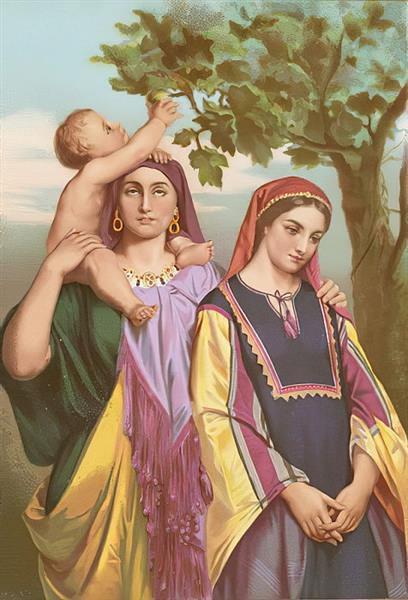
Jacob did not have an easy life. He loved Rachel, but was tricked into marrying her sister Leah. And when he finally married Rachel, his home suffered from rivalry between the two sisters.
This strife was not limited to Jacob’s household. It continued on in future generations: in the struggle between Rachel’s son Joseph and Leah’s sons; and in the conflict between King Saul, a descendant of Rachel, and David, a descendant of Leah. Why did Jacob need to endure so many obstacles when setting up his family — complications that would have such a long-term impact on future generations of the Jewish people?
The Present versus the Future
We live in a divided reality. We continuously deliberate: how much should we live for the moment, and how much should we work for the future? We must constantly balance between the here-and-now and the yet-to-come. This dilemma exists across all levels of life: individual, familial, communal, and national.
God’s original design for the world was that the entire tree, even the bark, would taste as sweet as its fruit (Gen. 1:11). In other words, even during the intermediate stages of working toward a goal, we should be able to sense and enjoy the final fruits of our labor. When the world is functioning properly, the present is revealed in all of its glory and serves as a suitable guide toward a loftier future. In such a perfect world, our current desires and wishes do not impinge upon our future aspirations.
But the physical universe is fundamentally flawed. The earth failed to produce trees that taste like their fruit. We endure constant conflict between the present and the future, the temporal and the eternal. As individuals and as a nation, we often need to disregard the sensibilities of the present since they will not lead us toward our destined path.
Rachel and Leah
Jacob’s marriage to two sisters, and the ongoing rivalry between them, is a metaphor for this duality in our lives.
Like all things in our world, Jacob’s home suffered from a lack of clarity. Jacob should have been able to establish his family on the basis of an uplifted present, blessed with integrity and goodness. He should have been able to marry and set up his home without making calculations with an eye to the future. The natural purity and simple emotions of his holy soul should have sufficed.
Rachel, whom Jacob immediately loved for the beautiful qualities of her soul, is a metaphor for the simple and natural love we feel for the revealed present. Jacob felt that Rachel’s external beauty was also in harmony with the unknown realm of the distant future.
But God’s counsel decreed that the future destiny of the people of Israel belonged not to Rachel, but to Leah. 1 Leah would be the principal matriarch of the Jewish people. Yet this future was so profoundly hidden, that its current state — in Leah — was hidden from Jacob.
This concealed quality of Leah is embedded in the very foundations of the Jewish people. Because of the legacy of Leah, we can raise our sights afar, skipping over the present circumstances, in order to aspire toward a lofty future. Just as Jacob found himself unexpectedly wed to Leah, so too, the path of the Jewish people throughout history does not always proceed in an orderly fashion. The future often projects its way into the present so that the present time may be elevated and sanctified.
Two Kings and Two Messiahs
The rivalry between Rachel and Leah, the conflict between the beautiful present and the visionary future, also found expression in the monarchy of Israel. The temporary reign of Saul, a descendant of Rachel, struggled with the eternal dynasty of David, a descendant of Leah. 2
Even in the Messianic Era, the divide between Rachel and Leah will continue, with two Messianic leaders: the precursive redeemer, Mashiach ben Joseph, a descendant of Rachel, and the final redeemer, Mashiach ben David, a descendant of Leah.
Nonetheless, we aspire for the simpler state in which the present is uplifting, and by means of its light, the future acquires its greatness. For this reason, Rachel was always honored as Jacob’s primary wife. Even Leah’s descendants in Bethlehem conceded: “Like Rachel and Leah who both built the house of Israel” (Ruth 4:11), honoring Rachel before Leah.
(Sapphire from the Land of Israel. Adapted from Ein Eyah vol. IV, pp. 44-46)
1 Six of the twelve tribes of Israel, including those designated for spiritual and political leadership (Levi and Judah), were born to Leah.
2 Saul, who is described as “the most handsome young man in Israel, head and shoulders above the people” (I Sam. 16:2), was a natural choice for king. And yet God chose to appoint David — a simple shepherd boy whose leadership qualities even his own father failed to see — as the true king of the Jewish people. As God explained to the perplexed prophet Samuel: “Look not upon his appearance, or the height of his stature, for I have rejected him. For it is not as man sees [that which is visible] to the eyes; the Lord sees into the heart” (I Sam. 16:7).]